Creekside Windows and Glass Blue logo

Creekside Windows & Glass

CALL US TODAY!

385-300-1258
  • Windows
    • New Windows
    • Replacement Windows
    • Glass Repair
    • Soundproof Windows
    • Low-E Windows
    • Window Cleaning
  • Doors
    • French Doors
    • Sliding Doors
    • Entry Doors
  • Shower Doors
    • Frameless Shower Doors
    • Framed Shower Doors
    • European Shower Doors
  • Brands
    • Alside
    • AMSCO
    • Andersen
  • Gallery
    • Window Gallery
    • Shower Door Gallery
  • About Us
    • Blog
    • Recent Projects
    • Service Area
    • Careers
  • Contact Us
Hard Water on Your Shower Door

If you have a glass shower door, chances are you’ve encountered cloudy, spotted glass that won’t look clean no matter how much you wipe it. The most likely culprit is hard water stains, which are stubborn mineral deposits on the glass that can build up over time. Unfortunately, these stains often require a bit more than a quick wipe-down to come clean. 

At Creekside Windows and Glass, we’re experts in glass care, restoration, and replacement. We want you to be able to enjoy clean, clear glass in your shower doors for years to come. That’s why we’re presenting this guide to cleaning hard water on your shower doors, DIY solutions, prevention tactics, and how to know when it’s time for glass replacement. 

What Causes Hard Water Stains on Shower Doors?

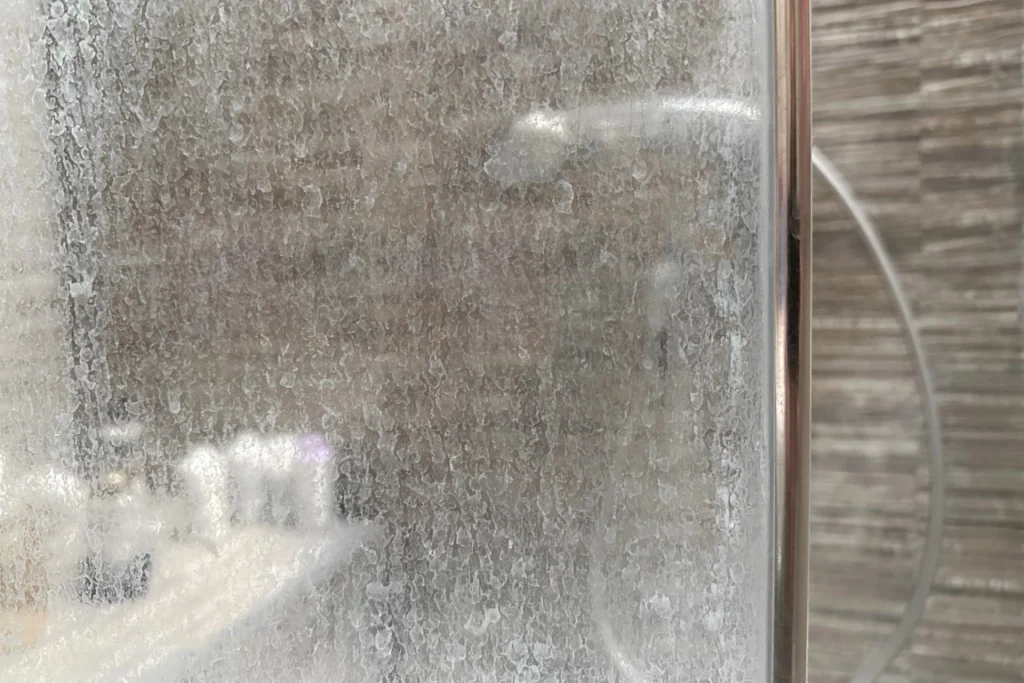
Water naturally contains certain minerals like calcium and magnesium. When the concentration of these minerals exceeds the average amount, it’s referred to as hard water. While there’s no serious health risks involved with drinking hard water, it can leave mineral deposits that look like whitish spots on your glass. 

Glass shower doors are especially vulnerable to mineral buildup because they’re frequently exposed to water droplets. As the water evaporates in the heat, it leaves the minerals behind. Plus, soap scum can combine with mineral deposits, creating a cloudy appearance over time. 

Identifying Hard Water Stains vs. Permanent Etching

If you suspect hard water is affecting your glass shower door, the first thing to do is determine whether it’s surface-level mineral buildup or glass etching. 

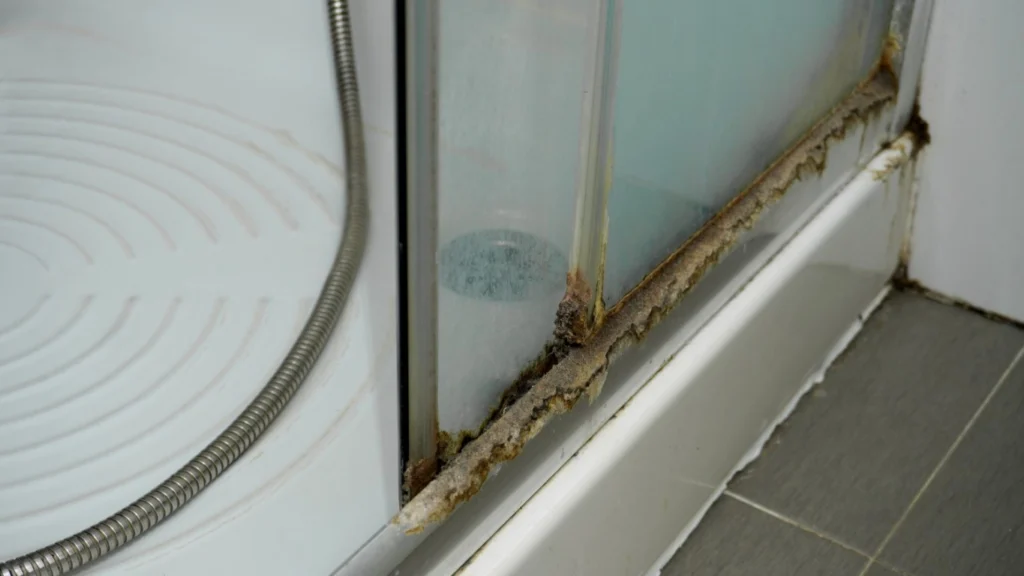
Mineral buildup, also known as limescale, resembles a cloudy film or white, chalky spots and feels rough to the touch. With proper cleaning, it’s usually removable. Glass etching, on the other hand, occurs when long-term mineral exposure causes the surface to become pitted or permanently dull. In these cases, professional restoration or replacement may be necessary. 

Hard Water on Your Shower Door

DIY Methods for Removing Hard Water Stains

Once you’ve confirmed that the cloudiness on your shower door is caused by hard water, it’s time to clean it. Regular glass cleaner may not be effective — instead, try one of these methods:

  • Vinegar: Make a solution with equal parts white vinegar and water. Spray it on the shower door and let it sit for a while — around 30 minutes. Use a damp, non-abrasive sponge to scrub the stain away. 
  • Baking soda: If the vinegar solution doesn’t do the trick, try making a paste out of baking soda and water, rubbing it on the stains, and letting it sit for about half an hour. Use a soft-bristled brush to remove the remaining buildup. 
  • Lemon juice: The natural acid in lemon juice can help dissolve mineral deposits. Combine some lemon juice with hot water and spray it on the glass. Or, if you want even more cleaning power, just cut the lemon in half and scrub the door with it. Let it sit for 30–60 minutes, then rinse with distilled water. 
  • Commercial hard water removers: If home remedies don’t fully remove the stains, you can try commercial cleaning products designed specifically for mineral buildup. It’s essential to follow manufacturer instructions and avoid using abrasive pads that can scratch the glass. 
Hard Water on Your Shower Door

When to Call the Professionals

If you’ve tried all these cleaning methods and your shower doors are still cloudy, it may be because the mineral buildup has led to etching. In this case, there’s nothing you can do on your own to fix it. You’ll need to seek professional glass restoration services, which include the use of professional polishing techniques and protective treatments. 

Depending on the extent of the etching and the age of your shower door, it may be worth it to just replace it. At Creekside Windows and Glass, we offer a wide range of frameless and framed shower doors to complement any bathroom and transform it into a more beautiful and functional space. 

How to Prevent Hard Water Buildup in the Future

Of course, it’s best to prevent hard water buildup before it can even happen. Follow these tips to keep your shower door clean and clear:

  • Use a squeegee and/or a microfiber towel to remove water after every shower
  • Give it a quick wipe-down with a vinegar solution every week or so
  • Install a water softener to prevent hard water stains at their source
  • Opt for professional aftermarket glass coatings to protect the surface from etching

Premium Shower Doors from Creekside Windows and Glass

Don’t let a cloudy, discolored shower door impact your bathroom. Contact Creekside Windows and Glass today to schedule a consultation or explore upgraded shower options. 

Filed Under: Window Installation

whole-home window replacement

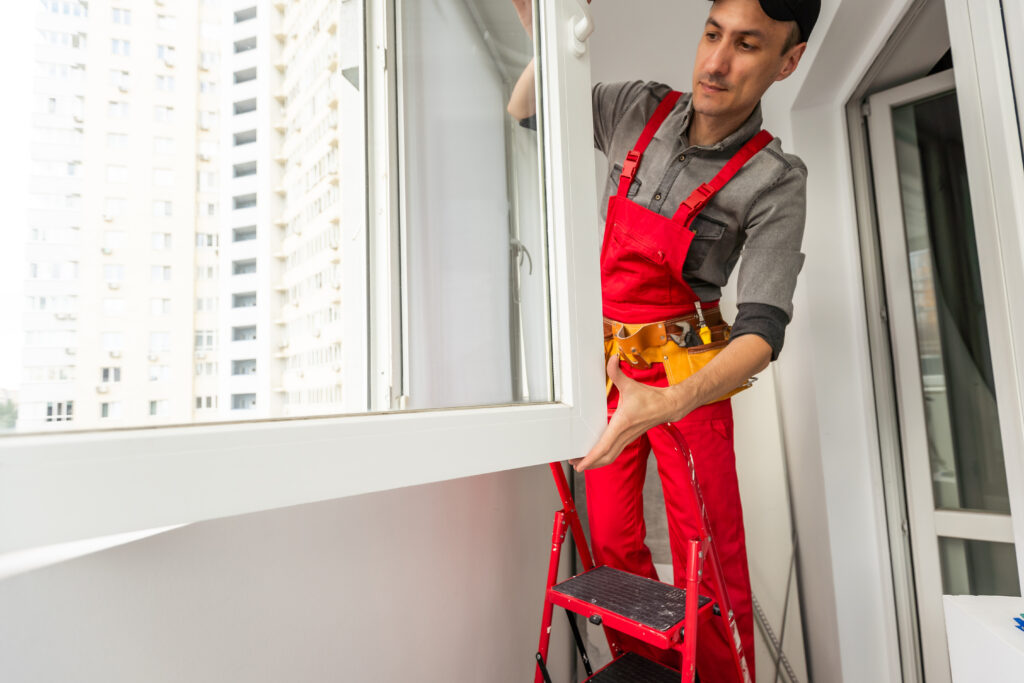
If your wintertime energy bills are rising, you’re probably concerned about your heating system’s efficiency. But your furnace may not be the problem. In fact, windows are the source of significant heat loss in many homes, causing drafts, uneven room temperatures, and high heating bills despite a properly functioning HVAC system. 

Whole-home window replacement is a long-term cost-saving solution for homes that need an energy efficiency boost. If your windows are old or worn-out, keep reading to learn more about how heat escapes through windows, how whole-home window replacement can save you money on heating, and the additional benefits of upgrading your windows. 

How Heat Escapes Through Old or Inefficient Windows

First, let’s go over how and why heat escapes through aging or inefficient windows:

  • Air leakage: Warm air escapes through gaps, worn seals, and warped frames. The cold outdoor air infiltrates your home, forcing your heating system to work harder to keep your home at a comfortable temperature. 
  • Poor insulation: Single-pane (or outdated double-pane) windows conduct heat easily, allowing it to escape. Additionally, aluminum frames transfer cold quickly. 
  • Radiant heat loss: Heat naturally spreads to colder surfaces. Without a Low-E coating, the glass allows indoor heat to radiate to the outdoors. 
  • Failed window seals: If you notice fogging between the panes of glass, this can indicate a loss of insulating gas, resulting in reduced performance. 

How Whole-Home Window Replacement Improves Heating Efficiency

whole-home window replacement

Whole-home window replacement is one of the best ways to improve heating efficiency, especially compared to partial window replacement. When you mix old and new windows, you create uneven insulation. The old and inefficient windows still allow heat to escape, which means your HVAC system still has to compensate for heat loss. This means it’s still hard to achieve consistent temperatures throughout your home and can lead to unpredictable energy bills. 

Let’s take a closer look at how whole-home window replacement can enhance your home’s heating efficiency:

  • Tighter building envelope: Advanced weatherstripping and precise installation reduce drafts and air infiltration.
  • Improved insulation performance: Double- or triple-pane windows with warm-edge spacers reduce heat transfer. 
  • Low-E glass technology: Low-E coatings reflect indoor heat back into the home during winter and block cold penetration without reducing natural light. 
  • High-performance frames: Frames made of vinyl, fiberglass, and composite materials provide better thermal resistance than metal. 
  • Whole-home efficiency: Whole-home window replacement eliminates weak spots that allow heat loss and allows for more consistent temperatures from room to room. 

How New Windows Reduce Heating Costs (and More!)

So, how does this efficiency translate to reduced heating costs? When you opt for whole-home window replacement, your heating system doesn’t have to work as hard to keep your home warm. Your home will retain heat better overnight and during extreme cold. This means your furnace will cycle less frequently and operate more efficiently, potentially reducing your monthly utility bills. 

Beyond lower heating bills, whole-home window replacement can extend the life of your HVAC system by reducing strain on your furnace, leading to fewer repairs. Plus, new windows resist moisture damage, rot, and seal failure, reducing future maintenance costs. 

Upgrades like recent whole-home window replacements appeal to buyers, increasing your home’s resale value. Additionally, many states offer utility incentives, rebates, tax credits, and energy-efficiency programs for energy efficiency upgrades. 

When Whole-Home Window Replacement Makes the Most Sense

Consider whole-home window replacement if: 

  • Your home has single-pane windows, especially if they’re older than 15–20 years
  • There’s visible frame damage or seal failure
  • You frequently notice drafts and cold rooms
  • Your heating bills rise year over year
  • You’re a homeowner planning long-term ownership
  • You’re preparing for resale or major energy upgrades

If you decide to replace your windows, look for windows with Energy Star ratings appropriate for your local climate, manufacturer warranties and a low U-factor. 

whole-home window replacement

Invest in Comfort and Energy Savings with Creekside Windows & Glass

At Creekside Windows and Glass, we know that professional installation matters as much as the window itself. That’s why we go the extra mile to ensure your windows are properly sealed and insulated to help you create a more energy-efficient home and experience the benefits of lower heating costs, consistent comfort, and long-term reliability. 

If your windows are old or inefficient, contact Creekside Windows and Glass today to learn more about how whole-home window replacement can take your home’s efficiency to the next level. 

Filed Under: Window Installation

Why Do Some Frameless Shower Doors Need a Header?

Frameless shower doors are exactly what they sound like: shower doors with minimal hardware, creating a seamless, modern look. However, the door still has to have enough structural support to be able to function properly. Usually, the door hinges from the wall, but when that’s not possible, a header may be necessary. 

If you’re considering upgrading to a frameless shower door, keep reading to learn what headers are, which situations call for one, whether they impact aesthetics, and what can happen when you go without one. 

What Is a Header on a Frameless Shower Door?

“Frameless” doesn’t mean no metal at all. Frameless shower doors still need hardware to connect the components and provide structural support, and some require headers, as well. These horizontal metal support bars are installed at the top of the glass and span between the glass panels or walls, providing greater strength, stability, and long-term performance. 

But why are headers sometimes necessary? It all has to do with stability and support. 

The glass used in frameless showers is thick and heavy. The door hinges carry a lot of stress, which is why it’s important to anchor them into a solid structure like a wall. However, some layouts cannot accommodate this, requiring the door to be placed in the middle of the enclosure instead. 

When there’s not a wall to anchor the door, a header is required to provide additional support, reduce long-term wear, improve safety, and help the door operate more smoothly. Without it, your frameless shower door can experience sagging, alignment issues, loosening hinges, or excess stress on the glass. This can lead to premature wear, costly repairs, and safety concerns. 

Why Do Some Frameless Shower Doors Need a Header?

Signs Your Frameless Shower Door May Need a Header

Not every frameless shower enclosure needs a header. To determine whether one is necessary, it’s important to have a professional glass company like Creekside perform an on-site evaluation of your shower’s layout and the placement of the surrounding walls. We’ll take into account the door size, glass thickness, and hinge locations as we develop custom recommendations for your space. With our help, you can achieve your design goals without sacrificing structural integrity. 

You may need to add a header to your frameless shower door if:

There Is No Wall Available for Hinge Support

Some bathrooms are laid out in such a way that prevents the shower door from being placed against a wall. For example, sometimes the toilet or sink is in the way or the shower enclosure is an odd shape. In these cases, hinging the door off another piece of glass isn’t ideal, as it places extra stress on the glass and impacts its longevity. A header provides a secure anchoring point from above, making it a safer, more durable alternative. 

The Glass Panels are Especially Large or Heavy

Depending on the size of the door, the type of glass used, and how thick the glass is, it may need some extra support. Without a header to help distribute the weight of the glass more evenly, the stress placed on the hinges will take its toll over time, causing sagging, misalignment, and increased wear and tear. 

Why Do Some Frameless Shower Doors Need a Header?

Will a Header Ruin the Frameless Look?

At Creekside Windows & Glass, we believe that you shouldn’t have to sacrifice aesthetics for durability. When designing and installing frameless shower doors, our goal is to ensure safety, strength, and long-lasting performance while creating beautiful solutions you’ll love for years to come. 

While some homeowners are hesitant to opt for a header because they’re worried about its impact on the way their shower looks, there’s no need to worry — frameless shower headers are slim and minimal, unlike bulky frames. There’s plenty of clean, modern hardware options that blend seamlessly into the shower enclosure. 

Frameless Shower Doors by Creekside Windows & Glass

At Creekside Windows & Glass, we’re experts in all things frameless shower doors. No matter how challenging the layout, we can design and install frameless shower enclosures that function just as beautifully as they look. Whether your shower requires a header or not, you can trust that you’ll truly love the results. 

If you’re considering a frameless shower door, contact us today to schedule a consultation and learn more about how we can help bring your vision to life. 

Filed Under: Window Installation

  • « Previous Page
  • 1
  • 2
  • 3
  • 4
  • …
  • 13
  • Next Page »

Creekside Windows & Glass

590 North Kays Dr. #113
Kaysville, UT 84037
385-300-1258
Monday 8:00 AM - 5:00 PM
Tuesday 8:00 AM - 5:00 PM
Wednesday 8:00 AM - 5:00 PM
Thursday 8:00 AM - 5:00 PM
Friday 8:00 AM - 5:00 PM
Saturday Closed
Sunday Closed

Directions

Contact Us

Name(Required)
Email(Required)

Follow Us

F I L X

2026 Creekside Windows & Glass | All Rights Reserved | Privacy Policy | Terms | XML Sitemap | Sitemap | Site by PDM